










Sydney St Patrick's Day Parade and Festival
Sun 14 Mar '27


Overview
Sydney is proud to hold the largest St Patrick's Day Parade and Festival in the Southern Hemisphere!
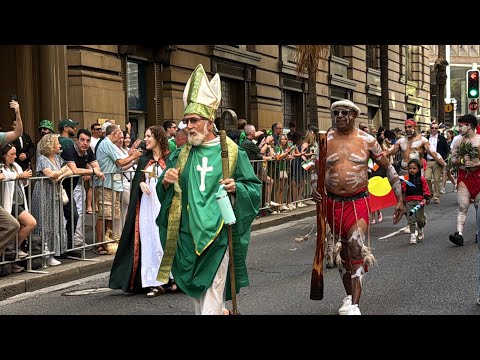
Sydney's St. Patrick's Day celebration has one of the longest histories of any city outside Ireland. Over two centuries, the event has grown into a vibrant multicultural celebration of Irish music, dance, family and community, bringing together Irish residents, the broader diaspora and all of multicultural Sydney.
This is a festival of joy and…
Sydney is proud to hold the largest St Patrick's Day Parade and Festival in the Southern Hemisphere!
Sydney's St. Patrick's Day celebration has one of the longest histories of any city outside Ireland. Over two centuries, the event has grown into a vibrant multicultural celebration of Irish music, dance, family and community, bringing together Irish residents, the broader diaspora and all of multicultural Sydney.
This is a festival of joy and passion, it is a festival of inclusion and harmony, it is not restricted to the Irish, it is the opportunity to spread the Irish warmth of culture and celebration of everything green!
Get in touch
Location
Sydney St Patrick's Day Parade & Festival
Queen Victoria Building Sydney NSW 2000 Australia
Get directionsFAQs
Accessibility
Access and Inclusion Statement
Actively welcomes people with access needs.
Adhere to The Food Authority requirements for allergy management in food preparation
Advise tour guides of the access needs of guests at the time of booking (includes pick up and drop off requirements)
Caters for people who are blind or have vision loss
Caters for people who are deaf or have hearing loss
Caters for people who use a wheelchair.
Caters for people with allergies and intolerances.
Caters for people with high support needs who travel with a support person
Caters for people with sufficient mobility to climb a few steps but who would benefit from fixtures to aid balance. (This includes people using walking frames and mobility aids)
Employ people with disability
Have a place to store medical equipment (eg oxygen)
Have a step free main entrance to the building and/or reception area (includes ramps or slopes with a maximum gradient of 1:14, otherwise are too steep for wheelchairs)
Have a wheelchair accessible toilet / shower and change room
Have accessibility information and photos, including of a bathroom, room and/or floor plan on your website (can be emailed on request)
Have accessible seating areas in theatrette
Have an accessible public toilet which is unlocked
Have an appropriate area for toileting an assistance dog
Have equipment to respond to anaphylactic shock such as epi–pens and defibrillator
Have Exit signs which are visible at a ground level (high level signs are difficult to see in a fire)
Have grab rails in the bathroom
Have options available for easier communication for people with dual sensory loss (Includes adapted telephones, adapted mobile telephones and Telephone Typewriters (TTY’s). For some people the fax machine is useful for sending messages in large print)
Have step free access to restaurant, lounge and bar
Have step free access to the conference or function room
Have step free outdoor pathways (includes picnic areas, barbecues and shelters)
Have visual alerts for emergencies (Include flashing light)
Have wheelchair accessible picnic tables (picnic tables require 720mm knee clearance and 800mm maximum height)
Have wheelchair accessible transport options available in the general vicinity (provide information on name of the operator, phone and website link to individual providers for private vehicles, community transport train, mini vans, hire cars, buses, taxis, ferry, tram, light rail etc in your access statement)
Modify your cooking and cleaning practices to cater for people with food allergies or chemical intolerances (could include menus with meals free from: nuts, dairy, seafood, eggs, gluten etc)
Offer a range of contact methods for receiving complaints
Offer multiple options for booking - web, email, phone
Provide assistance with booking arrangements (includes providing clear itineraries with written instructions on what to do at various destinations)
Provide digital communication materials (hard copy information is also available on line)
Provide information in audio format (includes an audio described map of your venue, audio descs of performances and/ or displays)
Provide information in large print
Train your staff in customer service for people with vision loss (training would incorporate way finding and communicating with people with vision loss)
Train your staff in communicating with people who are deaf or have hearing loss
Train your staff in communicating with people with learning or behavioural challenges
Train your staff in disability awareness
Train your staff to respond to allergic reactions
Use easy read fonts in your signage and communication materials (Helvetica and Arial)
Use floors/coverings which are slip resistant, firm and smooth
Use non-slip tiles in the bathroom or slip resistant matting
Use Plain English / easy read signage and information (includes menus and emergency information)
Welcomes and assists people who have challenges with learning, communication, understanding and behaviour. (includes people with autism, intellectual disability, Down syndrome, acquired brain injury (ABI), dyslexia and dementia)