











Holy Mackerel! The Death of the Son and the Power of the Fish - Part of ArtsLab: Overflow
Shopfront Theatre
Wed 08 Apr '26 – Sat 18 Apr '26 (DAILY event)

Overview
Five generations before Connor Maclachlan was born, his family made a pact with the Sea: Maclachlan sons would always be blessed with bountiful catches—but no daughter could eat the fish, or fall deathly ill.
By Jasmine Jenkins
Mentored by Jules Orculo
On his sixteenth birthday, Connor's blessing vanishes. He can't catch a single fish, and after eating the day's haul, he's struck with violent food poisoning. Cast out for failing his duties as…
Five generations before Connor Maclachlan was born, his family made a pact with the Sea: Maclachlan sons would always be blessed with bountiful catches—but no daughter could eat the fish, or fall deathly ill.
By Jasmine Jenkins
Mentored by Jules Orculo
On his sixteenth birthday, Connor's blessing vanishes. He can't catch a single fish, and after eating the day's haul, he's struck with violent food poisoning. Cast out for failing his duties as a Maclachlan son, Connor runs away.
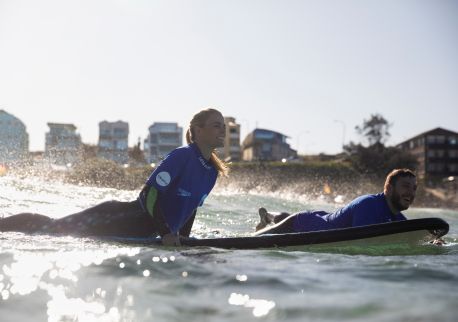
Forty years after his wife's death, Leslie spends his days spearfishing off a quiet South Coast beach. He's haunted by an angel who wears her face and seems determined to drag him toward the afterlife.
When Les' wetsuit is snagged on a jetty hook, he becomes Connor's first catch since losing the Sea's blessing. An unlikely friendship forms, built on shared stories, salt water, and second chances.
Holy Mackerel! is a new play about transness, family, grief, and belonging.
Get in touch
Location
FAQs
Accessibility
A quiet space is available at the venue/ facility
Actively welcomes people with access needs.
Ask all visitors if there are any specific needs to be met
Caters for people who are deaf or have hearing loss
Caters for people who use a wheelchair.
Caters for people with allergies and intolerances.
Caters for people with sufficient mobility to climb a few steps but who would benefit from fixtures to aid balance. (This includes people using walking frames and mobility aids)
Have a step free main entrance to the building and/or reception area (includes ramps or slopes with a maximum gradient of 1:14, otherwise are too steep for wheelchairs)
Have a wheelchair accessible toilet / shower and change room
Have accessibility information and photos, including of a bathroom, room and/or floor plan on your website (can be emailed on request)
Have an accessible public toilet which is unlocked
Have grab rails in the bathroom
Have lifts with enough space for people using a mobility aid to enter and turn around to use the lift buttons. Buttons are at accessible height.
Have step free outdoor pathways (includes picnic areas, barbecues and shelters)
Offer a range of contact methods for receiving complaints
Offer multiple options for booking - web, email, phone
Provide seating in common areas including reception area
Train your staff in disability awareness
Use floors/coverings which are slip resistant, firm and smooth
Use Plain English / easy read signage and information (includes menus and emergency information)
Welcomes and assists people who have challenges with learning, communication, understanding and behaviour. (includes people with autism, intellectual disability, Down syndrome, acquired brain injury (ABI), dyslexia and dementia)