









Abenteuertour vom Strand in die Wildnis


Product List
Product List
Überblick
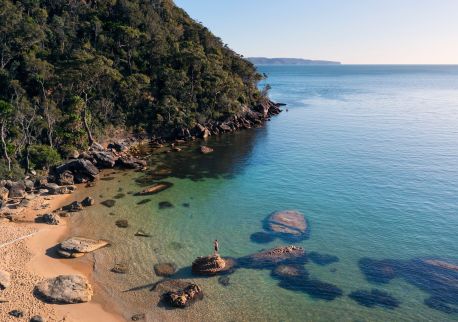
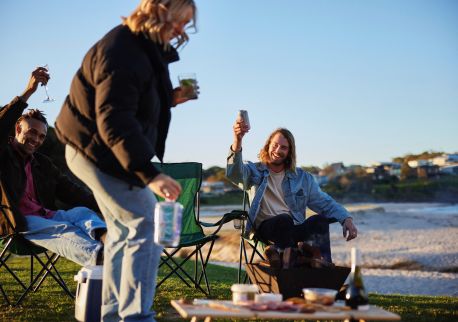
Lassen Sie den Alltag hinter sich und paddeln Sie mit dem Kajak durch Pittwater. Entdecken Sie die schönsten Plätze im Nationalpark – nur vom Wasser aus erreichbar! Paddeln Sie mit uns um Scotland Island und in eine malerische Bucht, wo Sie an einem einsamen Strand eine Teepause einlegen können. Unter der Führung von Phil geht es dann auf eine kurze Wanderung durch den Busch, vorbei an Eukalyptusbäumen, Kookaburras und Kakadus, zum Wasserfall…
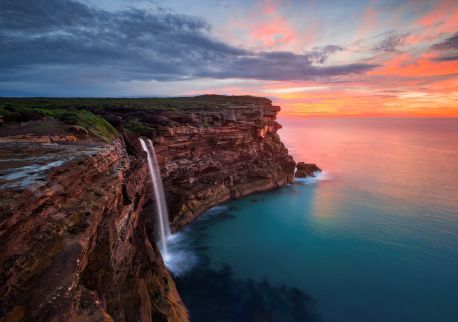
Lassen Sie den Alltag hinter sich und paddeln Sie mit dem Kajak durch Pittwater. Entdecken Sie die schönsten Plätze im Nationalpark – nur vom Wasser aus erreichbar! Paddeln Sie mit uns um Scotland Island und in eine malerische Bucht, wo Sie an einem einsamen Strand eine Teepause einlegen können. Unter der Führung von Phil geht es dann auf eine kurze Wanderung durch den Busch, vorbei an Eukalyptusbäumen, Kookaburras und Kakadus, zum Wasserfall von Lovett Bay. Wir kehren mit einem Lächeln im Gesicht zu unserem Yachthafen zurück. Der Spaziergang durch den Busch führt Sie sogar über einen Wasserfall – perfekt für ein tolles Erinnerungsfoto!
Bitte beachten Sie: Hut, Sonnenbrille, bequeme Kleidung für das Wetter, Schuhe, die nass werden dürfen (Sandalen, Laufschuhe) und Wechselkleidung für die Rückfahrt.
Kontaktieren Sie uns
Standort
FAQs
Zugänglichkeit
Actively welcomes people with access needs.
Adhere to The Food Authority requirements for allergy management in food preparation
Advise tour guides of the access needs of guests at the time of booking (includes pick up and drop off requirements)
Ask all visitors if there are any specific needs to be met
Geeignet für blinde oder sehbehinderte Menschen
Geeignet für Menschen mit Hörverlust oder Taubheitsgefühl.
Geeignet für Rollstuhlfahrer.
Caters for people with allergies and intolerances.
Geeignet für Menschen mit hohem Unterstützungsbedarf, die mit einer Begleitperson reisen.
Geeignet für Personen, die zwar einige Stufen steigen können, aber von Haltegriffen profitieren würden. (Dies schließt Personen ein, die Gehhilfen und Mobilitätshilfen benutzen.)
Have a bathroom which is fully accessible and equipped with ceiling hoist and adult change table
Have a Changing Places or Lift & Change toilet with a hoist and adult change table
Have a doorbell or intercom at an accessible height and display a contact number (accessible height is 900mm-1100 mm)
Have a place to store medical equipment (eg oxygen)
Have a step free main entrance to the building and/or reception area (includes ramps or slopes with a maximum gradient of 1:14, otherwise are too steep for wheelchairs)
Have a wheelchair accessible toilet / shower and change room
Have a wheelchair/scooter charging station (power point) in an accessible location
Have accessibility information and photos, including of a bathroom, room and/or floor plan on your website (can be emailed on request)
Have accessible seating areas in theatrette
Have an accessible public toilet which is unlocked
Have an appropriate area for toileting an assistance dog
Have at least one wheelchair accessible parking space with wheelchair accessible signage clearly displayed (International standards are 3200mm wide x 2500 mm high)
Have audio enabled lifts
Have doorways which are easy to open and have lever handles (doorways 850mm or wider when open and not heavy)
Have equipment to respond to anaphylactic shock such as epi–pens and defibrillator
Have grab rails in the bathroom
Have handrails on all your stairways
Have lifts with enough space for people using a mobility aid to enter and turn around to use the lift buttons. Buttons are at accessible height.
Have options available for easier communication for people with dual sensory loss (Includes adapted telephones, adapted mobile telephones and Telephone Typewriters (TTY’s). For some people the fax machine is useful for sending messages in large print)
Have raised tactile buttons in your lifts
Have rooms which are interconnecting
Have step free access to restaurant, lounge and bar
Have step free access to the conference or function room
Have step free outdoor pathways (includes picnic areas, barbecues and shelters)
Have wheelchair access to amusements and activities including boats and bush trails (includes tour rides, skyways, trolley cars, flying fox, amusement rides and boating)
Have wheelchair accessible picnic tables (picnic tables require 720mm knee clearance and 800mm maximum height)
Have wheelchair accessible transport options available in the general vicinity (provide information on name of the operator, phone and website link to individual providers for private vehicles, community transport train, mini vans, hire cars, buses, taxis, ferry, tram, light rail etc in your access statement)
Modify your cooking and cleaning practices to cater for people with food allergies or chemical intolerances (could include menus with meals free from: nuts, dairy, seafood, eggs, gluten etc)
Offer a range of contact methods for receiving complaints
Offer multiple options for booking - web, email, phone
Provide beach matting and beach wheelchairs for people to access the water
Provide linen that is chemical and fragrance free (if requested)
Provide portable commode chairs
Provide portable hoist
Provide portable ramps
Provide seating in common areas including reception area
Provide toiletries which are chemical and fragrance free (if requested)
Provide valet parking
Provide wheelchair access to spa/gym
Train staff to use a DeafBlind Communicator (a portable device consisting of a DB-Phone and DB-Braille with QWERTY or Perkins keyboard)
Train your staff in customer service for people with vision loss (training would incorporate way finding and communicating with people with vision loss)
Train your staff in communicating with people who are deaf or have hearing loss
Train your staff in disability awareness
Train your staff to respond to allergic reactions
Use easy read fonts in your signage and communication materials (Helvetica and Arial)
Use floors/coverings which are slip resistant, firm and smooth
Use non-slip tiles in the bathroom or slip resistant matting
Use organic (chemical and fragrance free) cleaning products
Use organic (chemical and fragrance free) deodorisers in public areas and rooms
Website meets WCAG 2.0 accessibility standards