










iFLY Downunder Indoor Skydiving Penrith


Überblick
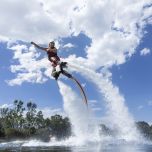
Erleben Sie den Nervenkitzel des Fliegens bei iFLY Indoor Skydiving! Schweben Sie in einem hochmodernen Indoor-Skydiving-Windkanal über die Luft!
Ob neugierige Kinder, abenteuerlustige Großeltern, Fluganfänger, Reisende oder Menschen mit Behinderung – Indoor-Skydiving ist ein aufregendes Erlebnis für alle Altersgruppen und Fähigkeiten. Vorkenntnisse sind nicht erforderlich!
Jedes Flugpaket beinhaltet die gesamte Flugausrüstung, eine Sicherheitseinweisung und die persönliche Betreuung durch einen erfahrenen Instruktor. Unser freundliches Team sorgt dafür, dass Sie sich wohl und sicher fühlen und begleitet Sie bei jedem Schritt.
Ideal für Familienausflüge, Geburtstagsfeiern, Gruppenreisen oder einfach, um etwas Neues auszuprobieren: iFLY bietet ein unvergessliches Erlebnis, das Sie mit Freunden, Familie und Kollegen teilen können.
Kontaktieren Sie uns
Ähnliche Artikel
Standort
123 Mulgoa Road Next to Penrith Panthers Entertainment Complex Penrith NSW 2750 Australien
Wegbeschreibung erhaltenFAQs
Zugänglichkeit
Access and Inclusion Statement
A quiet space is available at the venue/ facility
Ermöglicht der Betreuungsperson einer Person freien Eintritt zu teilnehmenden Veranstaltungsorten und Events.
Actively welcomes people with access needs.
Advise tour guides of the access needs of guests at the time of booking (includes pick up and drop off requirements)
Ask all visitors if there are any specific needs to be met
Geeignet für blinde oder sehbehinderte Menschen
Geeignet für Menschen mit Hörverlust oder Taubheitsgefühl.
Geeignet für Rollstuhlfahrer.
Geeignet für Personen, die zwar einige Stufen steigen können, aber von Haltegriffen profitieren würden. (Dies schließt Personen ein, die Gehhilfen und Mobilitätshilfen benutzen.)
Employ people with disability
Have a step free main entrance to the building and/or reception area (includes ramps or slopes with a maximum gradient of 1:14, otherwise are too steep for wheelchairs)
Have a wheelchair accessible toilet / shower and change room
Have accessibility information and photos, including of a bathroom, room and/or floor plan on your website (can be emailed on request)
Have accessible seating areas in theatrette
Have an accessible public toilet which is unlocked
Have doorways which are easy to open and have lever handles (doorways 850mm or wider when open and not heavy)
Have grab rails in the bathroom
Have handrails on all your stairways
Have lifts with enough space for people using a mobility aid to enter and turn around to use the lift buttons. Buttons are at accessible height.
Have raised tactile buttons in your lifts
Have step free access to restaurant, lounge and bar
Have step free access to the conference or function room
Have step free outdoor pathways (includes picnic areas, barbecues and shelters)
Have visual alerts for emergencies (Include flashing light)
Have wheelchair accessible transport options available in the general vicinity (provide information on name of the operator, phone and website link to individual providers for private vehicles, community transport train, mini vans, hire cars, buses, taxis, ferry, tram, light rail etc in your access statement)
Offer a range of contact methods for receiving complaints
Offer multiple options for booking - web, email, phone
Provide assistance with booking arrangements (includes providing clear itineraries with written instructions on what to do at various destinations)
Provide digital communication materials (hard copy information is also available on line)
Provide seating in common areas including reception area
Train your staff in customer service for people with vision loss (training would incorporate way finding and communicating with people with vision loss)
Train your staff in communicating with people who are deaf or have hearing loss
Train your staff in communicating with people with learning or behavioural challenges
Train your staff in disability awareness
Use easy read fonts in your signage and communication materials (Helvetica and Arial)
Welcomes and assists people who have challenges with learning, communication, understanding and behaviour. (includes people with autism, intellectual disability, Down syndrome, acquired brain injury (ABI), dyslexia and dementia)