
















Elements Float Wellnesszentrum


Product List
Product List
Überblick
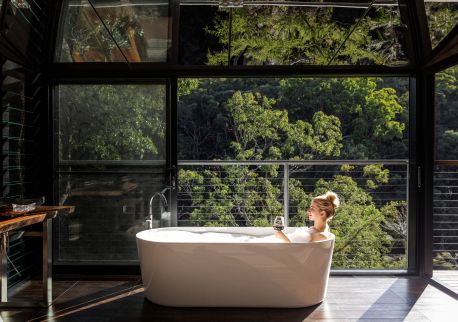
Das Elements Float Wellness Centre ist eine Oase der Ruhe und Entspannung in Emu Plains, Penrith, am Tor zu den Blue Mountains. Es ist ideal für Reisende, die Erholung und Entspannung suchen. Das Elements bietet private Behandlungsräume, in denen Gäste in ihrer eigenen Wohlfühloase zur Ruhe kommen können.
Zu den angebotenen Leistungen gehören Floating-Therapie, Infrarotsauna, hyperbare Sauerstofftherapie (mHBOT), Ganzkörper-Rotlichttherapie,…
Das Elements Float Wellness Centre ist eine Oase der Ruhe und Entspannung in Emu Plains, Penrith, am Tor zu den Blue Mountains. Es ist ideal für Reisende, die Erholung und Entspannung suchen. Das Elements bietet private Behandlungsräume, in denen Gäste in ihrer eigenen Wohlfühloase zur Ruhe kommen können.
Zu den angebotenen Leistungen gehören Floating-Therapie, Infrarotsauna, hyperbare Sauerstofftherapie (mHBOT), Ganzkörper-Rotlichttherapie, Kompressionsmassage und Kontrasttherapie. Jede Anwendung kombiniert natürliche Elemente mit moderner Wellness-Technologie und fördert so tiefe Entspannung, erholsamen Schlaf, neue Energie und körperliche Regeneration.
Nach einem langen Flug, einer Autofahrt, einer Wanderung oder einem Tag in Penrith und den Blue Mountains bietet das Elements einen ruhigen und komfortablen Ort zum Abschalten und Auftanken. Mit verlängerten Öffnungszeiten und einem exzellenten Fünf-Sterne-Ruf ist es eine ideale Ergänzung für eine Reise durch West-Sydney oder die Blue Mountains.
Kontaktieren Sie uns
Product List
Ähnliche Artikel
Product List
Standort
FAQs
Zugänglichkeit
A quiet space is available at the venue/ facility
Actively welcomes people with access needs.
Advise tour guides of the access needs of guests at the time of booking (includes pick up and drop off requirements)
Ask all visitors if there are any specific needs to be met
Geeignet für blinde oder sehbehinderte Menschen
Geeignet für Menschen mit Hörverlust oder Taubheitsgefühl.
Geeignet für Rollstuhlfahrer.
Caters for people with allergies and intolerances.
Geeignet für Menschen mit hohem Unterstützungsbedarf, die mit einer Begleitperson reisen.
Geeignet für Personen, die zwar einige Stufen steigen können, aber von Haltegriffen profitieren würden. (Dies schließt Personen ein, die Gehhilfen und Mobilitätshilfen benutzen.)
Have a low noise reception areas with hearing loss friendly acoustics and adequate lighting for viewing facial expressions (includes common areas which are free of background noise, background music)
Have a place to store medical equipment (eg oxygen)
Have a step free main entrance to the building and/or reception area (includes ramps or slopes with a maximum gradient of 1:14, otherwise are too steep for wheelchairs)
Have a wheelchair accessible toilet / shower and change room
Have an accessible public toilet which is unlocked
Have at least one wheelchair accessible parking space with wheelchair accessible signage clearly displayed (International standards are 3200mm wide x 2500 mm high)
Have doorways which are easy to open and have lever handles (doorways 850mm or wider when open and not heavy)
Have Exit signs which are visible at a ground level (high level signs are difficult to see in a fire)
Have grab rails in the bathroom
Have step free outdoor pathways (includes picnic areas, barbecues and shelters)
Have visual alerts for emergencies (Include flashing light)
Offer a range of contact methods for receiving complaints
Offer multiple options for booking - web, email, phone
Provide assistance with booking arrangements (includes providing clear itineraries with written instructions on what to do at various destinations)
Provide linen that is chemical and fragrance free (if requested)
Provide seating in common areas including reception area
Provide toiletries which are chemical and fragrance free (if requested)
Provide wheelchair access to spa/gym
Train your staff in customer service for people with vision loss (training would incorporate way finding and communicating with people with vision loss)
Train your staff in communicating with people who are deaf or have hearing loss
Train your staff in communicating with people with learning or behavioural challenges
Train your staff in disability awareness
Train your staff to respond to allergic reactions
Use easy read fonts in your signage and communication materials (Helvetica and Arial)
Use floors/coverings which are slip resistant, firm and smooth
Use non-slip tiles in the bathroom or slip resistant matting
Use organic (chemical and fragrance free) cleaning products
Use organic (chemical and fragrance free) deodorisers in public areas and rooms
Use Plain English / easy read signage and information (includes menus and emergency information)
Welcomes and assists people who have challenges with learning, communication, understanding and behaviour. (includes people with autism, intellectual disability, Down syndrome, acquired brain injury (ABI), dyslexia and dementia)